In the quiet woods outside Blackville, South Carolina, there is an acre of land with an unusual owner.
The deed is real, filed in Barnwell County, and it reads the way deeds read — legal language, signatures, a transfer of property. Except the recipient is listed as God Almighty, for the use of the public. On July 21, 1944, a man named L.P. “Lute” Boylston decided he had no business holding title to something that had never really belonged to any individual person, and he acted accordingly.
The spring had been flowing long before Boylston was born, and it is still flowing now.
The Water
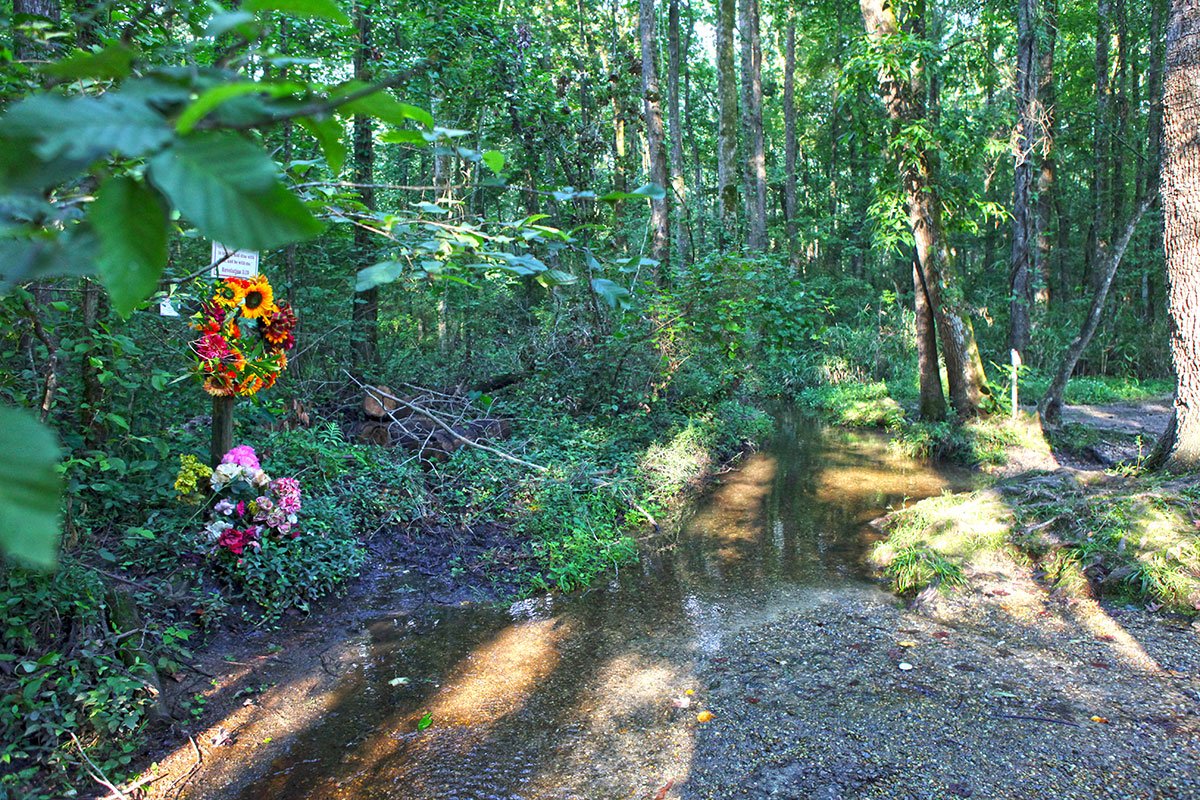
God’s Acre Healing Springs is a natural artesian spring — water pushed to the surface by underground pressure, mineral-rich and cold and clear, emerging from the South Carolina earth with a consistency that has made it a landmark for centuries. The land around it is quiet and shaded, the kind of place that feels set apart from whatever you were doing before you got there.
The Edisto people were the first to recognize what this water was. Long before European contact, this spring was considered sacred — a place where the water’s mineral content and its cool, reliable flow were understood as evidence of restorative power. That recognition predates any written record of the site and represents the oldest layer of a history that has been accumulating here for a very long time.
The Legend
Local tradition holds that the spring’s healing reputation received its most dramatic test during the Revolutionary War. After a skirmish near Windy Hill Creek, four gravely wounded British Loyalists were left for dead on the field — too far gone, by any military calculation, to be worth the effort of moving. According to the legend, Native Americans brought the soldiers to the spring, guiding them to water that the Edisto people had trusted for generations. The men drank from it and bathed their wounds.
Six months later, they reappeared at their garrison. Alive. Recovered. Crediting the water.
Whether the story is history or legend — and in a place this old, the line between those two things has a way of dissolving — it captures something real about how this spring has been understood by every community that has encountered it. The water means something here. It has always meant something.
The Deed
Boylston’s decision in 1944 was not a legal formality. It was a statement about the nature of the place and the impropriety of private ownership over something that had functioned as a public sacred site for centuries. He had owned the land. He chose not to anymore. The paperwork transferred the property to God Almighty, which has the practical effect of ensuring that no individual or corporation can ever claim it, develop it, or close it off.
The spring has been freely accessible to the public ever since, as it was before Boylston owned it and before anyone owned it. The deed simply made that permanence official.
What People Find Here
Visitors still come to God’s Acre Healing Springs from across the South, arriving with jugs and bottles and containers of every description, filling them under the shade trees and taking the water home. Some come seeking relief from arthritis, chronic pain, or conditions that conventional medicine has not resolved. Some come out of curiosity. Some come because their grandparents came, and their grandparents’ grandparents before that, and the habit of faith in this particular water runs deep in certain families.
What the water actually contains — the specific mineral composition that has made it the subject of centuries of reverence — is a matter of chemistry as much as belief. What people find when they arrive is harder to measure: the shade, the silence, the sense of a place that has been receiving visitors for longer than anyone alive can remember, and that will keep receiving them long after everyone here is gone.
The spring flows freely, as it always has. The land belongs to God, which is to say it belongs to everyone.