There’s a town in West Virginia so small you could walk across it in ten minutes. It sits where the Potomac and Shenandoah rivers collide, pressed tight between mountain ridges, quiet enough on most days that the loudest sounds are church bells and the footsteps of hikers passing through.
And yet Harpers Ferry may have done more to change the course of American history than any town its size has any right to.
Why This Place Mattered
Geography made Harpers Ferry valuable long before anyone fired a shot here. The confluence of two major rivers, a natural mountain pass, a railroad crossing — whoever controlled this narrow strip of land controlled the gateway between North and South. The federal government recognized that early. In 1799, they built an armory here. Thousands of rifles. Thousands of muskets. Enough weapons to supply an army. That made Harpers Ferry strategically priceless — and dangerously tempting.
The Man With a Plan
By 1859, America was already tearing itself apart over slavery. The arguments had been running for decades — in Congress, in newspapers, in church pulpits — and one man had decided the arguments were over.
His name was John Brown. Funded by wealthy Northern abolitionists who believed in his cause, he gathered twenty-one followers and formulated a plan that was either visionary or delusional, depending on who you asked. He would seize the armory, arm enslaved people across the South, and ignite a massive uprising. Harpers Ferry would be the first domino.
On a Sunday night in October, Brown and his men slipped into town without uniforms, without drums, without warning. They cut the telegraph wires. They captured the armory. They took hostages — including Lewis Washington, great-grandnephew of George Washington himself, a choice Brown made deliberately.
And then they waited for the uprising that never came.
The Rebellion That Failed — And Didn’t
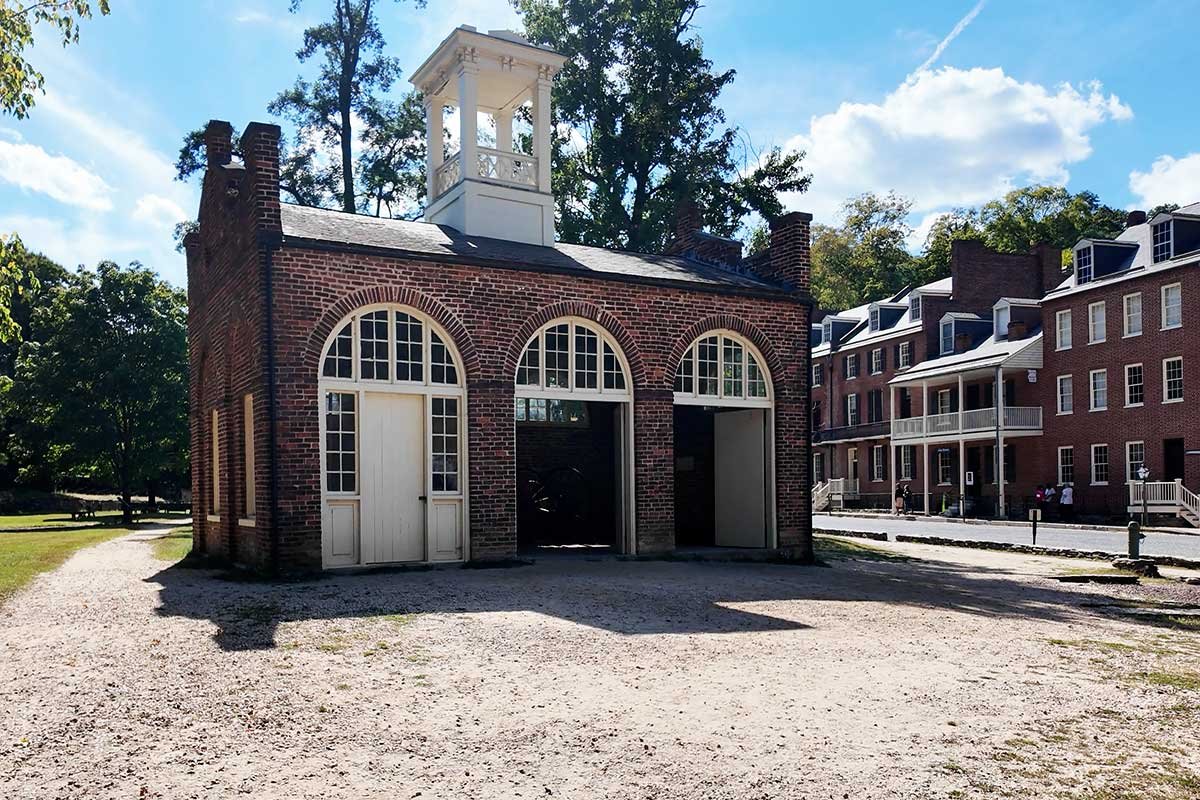
Instead of enslaved people rallying to his cause, Brown found himself surrounded by farmers, militia, and railroad workers. Gunfire echoed off brick walls. Two of his own sons died in the fighting. By morning, he and his remaining men were pinned inside a small engine house, outnumbered, with no way out.
The U.S. Marines who finally stormed the building were led by a Virginia colonel named Robert E. Lee, with a young lieutenant named J.E.B. Stuart at his side. Two men who would soon become Confederate legends, capturing a man who died trying to end slavery. History has a bitter sense of irony.
Brown was captured, tried for treason, and sentenced to hang. The rebellion had failed.
Or so it seemed.
The Spark Takes Hold
Something unexpected happened after Brown’s execution. Rather than fading into a footnote, he became a symbol. To the South, he was a terrorist. To many in the North, he was a martyr. Church bells rang on the day he died. Writers praised him. Union soldiers would march into battle singing about him — a song that eventually became the Battle Hymn of the Republic.
Americans stopped arguing. They started choosing sides. Sixteen months after the raid, the first shots of the Civil War were fired. Not at Harpers Ferry — but many historians believe the war truly began here. This is where compromise died.
Eight Times Over
The violence that followed was relentless. During the Civil War, Harpers Ferry changed hands eight times — Union, Confederate, Union, back and forth — until much of the town was rubble and the armory lay in ruins.
What rose from that rubble was unexpected. Storer College, one of the first integrated schools in America, opened in Harpers Ferry after the war. Formerly enslaved men and women came here to learn to read, to write, to rebuild their lives. In the same town where violence tried to force freedom, education quietly finished the work.
What’s Left
Today the rifles are gone. The soldiers are gone. The smoke cleared long ago. Harpers Ferry is a national historical park now — brick streets, interpretive signs, hikers with backpacks passing through on their way to somewhere else.
But stand here at dusk, when the rivers go still and the light drops behind the ridgeline, and the weight of the place has a way of finding you. This is where a nation tipped toward war. Where one man’s impossible plan rippled forward through time in ways he never lived to see.
Ten minutes to walk across. A lifetime to understand.