In three years, a town of a few hundred people in the Kentucky mountains lost more than a dozen neighbors to gunfire. These weren’t accidents or drunken brawls. They were planned killings, many of them carried out by men wearing badges.
This is Morehead, Kentucky, between 1884 and 1887. And what happened here was not a simple feud between violent families. It was something more disturbing: the systematic capture of legal authority and its conversion into a weapon against the people it was supposed to protect.
The Prize
Rowan County had been carved from the Appalachian mountains in 1856, but by the 1880s it was still carrying the wounds of the Civil War in everything from family loyalties to political allegiances. The Martins were Union Republicans, old farming families. The Tollivers were Democrats with Confederate sympathies, building a political machine in a county small enough that politics was never abstract — it was entirely personal.
What both families understood was that the real prize wasn’t elected office in any symbolic sense. It was the sheriff’s office, and everything that came with it. The sheriff controlled the jail. He appointed the deputies. He decided which warrants got served and which got ignored, which witnesses got protection and which got visited in the night. He summoned the juries. In a county this isolated, with no meaningful oversight from the state, whoever held the sheriff’s office held the county itself. Win the courthouse and you owned the law. Own the law and nothing could touch you.
By 1884, the Martins and the Tollivers were no longer political rivals. They were fighting for control of the machinery of justice itself.
Election Day
August 4, 1884. The ballot included the sheriff’s race, and the courthouse lawn in Morehead was a tinderbox before the polls opened. Old grudges, Civil War loyalties, neighbors who had stopped trusting each other — all of it compressed into a single day.
An argument between Republican John Martin and Democrat Floyd Tolliver turned physical, then turned to pistols. Shots rang out. Martin was wounded. His friend Solomon Bradley was killed. No one could agree who fired first. Both men were later indicted. But the political feud had crossed into blood, and there was no crossing back.
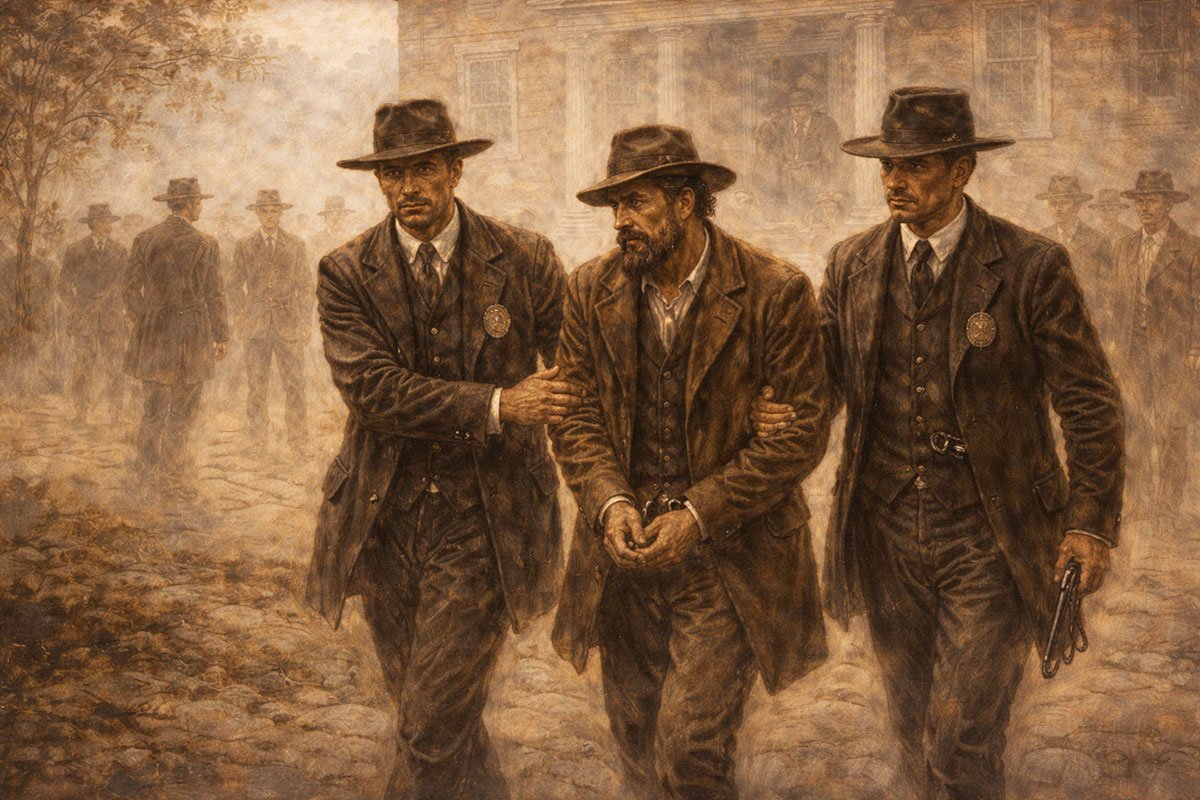
Martin demanded arrests. Instead, the Tolliver-controlled sheriff arrested him. Deputies announced they were moving him to a safer jail in Winchester. The train never arrived. At Farmers Station, masked men boarded the car, dragged Martin out, and shot him repeatedly while he was still in custody. The deputies offered little or no resistance. Martin died the next day.
After that, everyone in Rowan County understood what had happened. The law wasn’t there to protect them. It was there to deliver them to their enemies.
The Courthouse as a Weapon
Craig Tolliver consolidated control over the following years with a thoroughness that left little room for doubt about his intentions. His allies held the sheriff’s office. His relatives wore the badges. Warrants were served when he wanted them served and ignored when he didn’t. Men accused of killing Martins walked free. Martin supporters were arrested on the thinnest charges. Witnesses stopped talking. Juries reached the expected conclusions.
By later accounts, Tolliver once carried a Winchester rifle openly into the courtroom, leaning it against the bench beside him — not concealing it, not apologizing for it, simply placing it there as a statement about what kind of proceedings these were. Trials were performances. Everyone knew the ending before the testimony began.
Families packed wagons and left. Those who stayed chose a side or became targets.
Boone Logan’s Decision
The violence eventually reached younger members of the Logan family — relatives of the Martins who were not politicians or gunfighters. Their deaths broke something in Boone Logan that three years of trying the legal system had not quite finished breaking.
He had filed petitions. Submitted affidavits. Made appeals to state authorities. None of it had produced any consequence for the men responsible. The system that should have provided remedy had been captured by the people causing the harm.
So Logan stopped filing papers and started gathering men.
The End
On June 22, 1887, before sunrise, nearly a hundred armed citizens surrounded Morehead. The Tollivers barricaded themselves inside the American Hotel. At dawn the shooting started, rifles cracking through the valley for hours. When Craig Tolliver ran for the railroad tracks, he didn’t reach them. A volley dropped him yards from the rails. The war ended in the dirt.
What Followed
The violence shocked Kentucky badly enough that state lawmakers debated abolishing Rowan County entirely, declaring it a failed society unworthy of continuing as a political entity. Instead, they reorganized it under state control. It took decades to heal into something resembling a normal community.
Today Morehead is a college town — quiet, peaceful, the kind of place that gives no outward indication of what happened on its streets. But for three years it demonstrated something that American history returns to again and again: when the courthouse fails, when the law becomes a tool of the people it’s supposed to constrain, the institution doesn’t simply lose credibility. It creates the conditions for something far more dangerous to replace it.
When the law stops protecting people and starts hunting them, people eventually stop looking to the law.