South Carolina’s most visited state park is also one of its most fragile — a barrier island where the ocean is always winning.
There are places in the South that feel like the edge of the world, and Hunting Island is one of them. Located just outside Beaufort, South Carolina, this barrier island state park draws more visitors than any other in the state — and once you’ve stood on its beaches, walked beneath its maritime forest, or climbed its lighthouse at sunset, it’s easy to understand why.
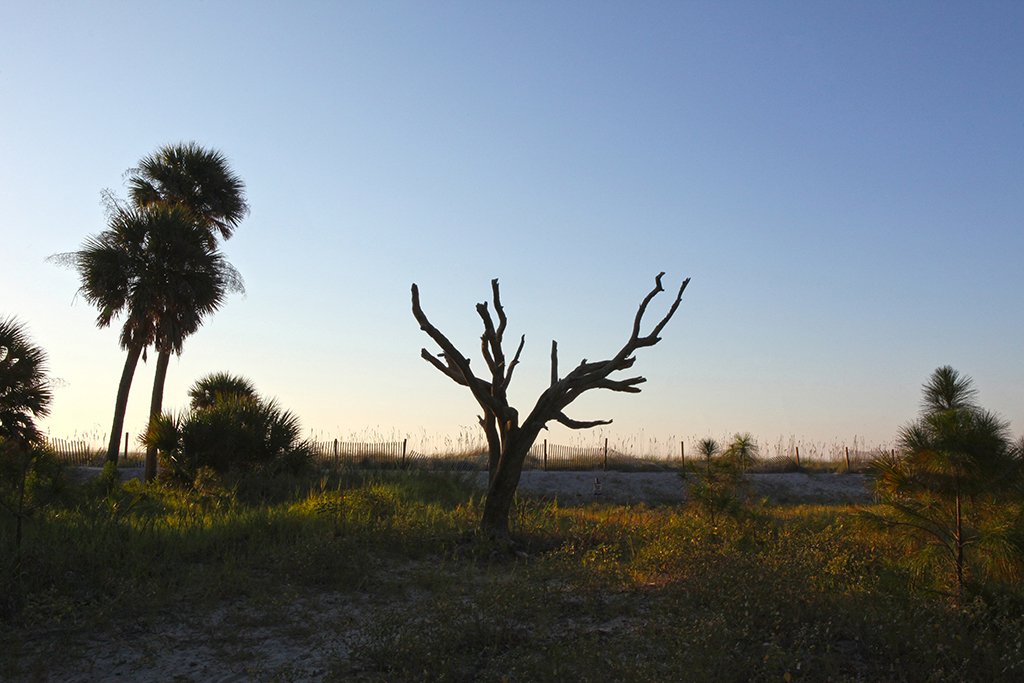
What makes Hunting Island different from the manicured beach parks of the Carolina coast is its wildness. This is not a place of boardwalks and beach umbrellas. The landscape here is raw and constantly shifting — storm-sculpted shorelines, ghost forests of salt-killed palmettos standing dead in the surf, and miles of undeveloped beach that stretch in both directions without a building in sight.
The Lighthouse
The Hunting Island Lighthouse is the park’s centerpiece and one of the only publicly climbable lighthouses in South Carolina. Built in 1875 — and notably designed to be disassembled and relocated as the shoreline eroded — it rises 136 steps to an observation deck that offers sweeping views of the island, the Atlantic, and the tidal marshes that surround it. On a clear day, the panorama is as good as anything the Lowcountry has to offer.
The lighthouse’s relocatable design turned out to be prescient. Hunting Island has lost significant land to erosion over the decades, and the encroaching ocean remains one of the park’s defining features — beautiful and sobering in equal measure.
The Forest and the Shore
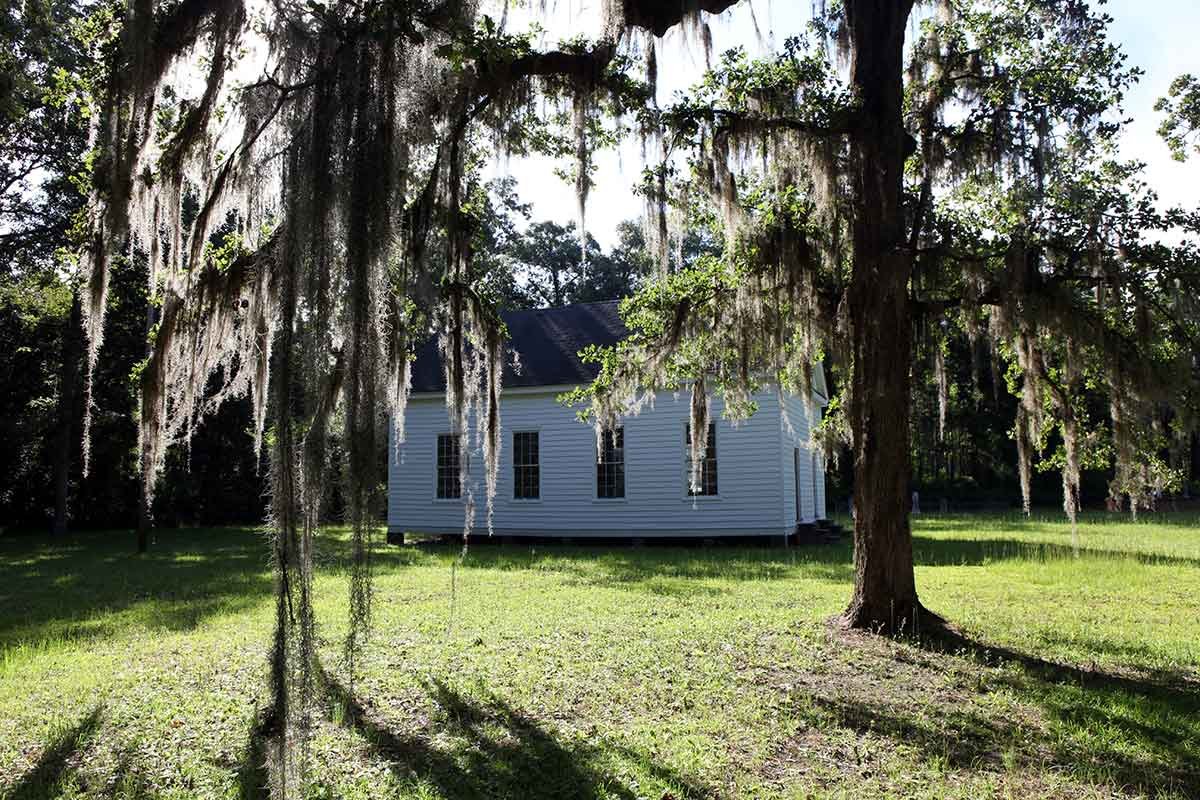
Beyond the lighthouse, the park unfolds into something genuinely immersive. Maritime forest trails wind through live oaks draped in Spanish moss, opening suddenly onto stretches of beach littered with bleached driftwood and the skeletal remains of trees swallowed by the advancing tide. It is the kind of scenery that stops people mid-stride.
The lagoon on the park’s western side offers a calmer counterpoint — a sheltered tidal environment popular with kayakers, anglers, and anyone looking to trade the Atlantic wind for something quieter. Loggerhead sea turtles nest on the island’s beaches each summer, and the park’s relatively undisturbed habitat supports an unusually rich variety of coastal wildlife.
Plan Your Visit
Hunting Island is located about 16 miles east of Beaufort on US-21. The park charges a modest admission fee and offers camping for those who want to stay after the day visitors have gone — there is something to be said for watching the sun drop into the marsh from a campsite a few hundred yards from the ocean.
Come early if you can. The morning light on the ghost forest is worth the alarm clock, and the beach is a different place entirely before the crowds arrive. This is one of those parks that gives back in proportion to the attention you bring to it.