At the mouth of the Chesapeake Bay stands a place that was never conquered — and quietly helped end slavery in the United States.
At the mouth of the Chesapeake Bay, where the waters of Hampton Roads meet the Atlantic, sits one of the most unusual military installations in American history. A place that was never conquered. Never abandoned. And one that played a quiet, pivotal role in the unraveling of American slavery. This is Fort Monroe, Virginia — sometimes called Freedom’s Fortress.
From above, Fort Monroe looks almost unreal. A massive six-sided stone fortress surrounded by a wide moat, sitting on a narrow peninsula at Old Point Comfort. It is the largest stone fort ever built in the United States, and for nearly two centuries it guarded one of the most strategically vital harbors on the East Coast. But the military architecture is almost beside the point. What makes Fort Monroe extraordinary is everything that happened inside and around it — a layered series of events so improbable that, laid end to end, they read more like allegory than history.
Before the Fort: 1619
The story of this place begins long before the stone walls existed. In late August 1619, two English privateer ships appeared off this same peninsula. Their cargo had been seized from a Portuguese slave ship called the São João Bautista, which had been carrying more than 350 Africans kidnapped from the Kingdom of Ndongo, in what is now Angola. Between twenty and thirty of those Africans were brought ashore at Old Point Comfort and traded to Virginia colonists for food and supplies.
Their arrival marks the beginning of forced African labor in English North America. Two of them — known to history only as Antoney and Isabella — would later have a son named William, recorded as the first child of African descent born in the English colonies. They settled here. At this exact place. Where the fort now stands.
Building the Fortress
Construction of the stone fort began in 1819. The War of 1812 had exposed how badly vulnerable the American coastline was — British forces had sailed freely into the Chesapeake Bay, burned Washington, and threatened the entire Eastern Seaboard. The federal response was an ambitious coastal defense program known as the Third System of Fortifications, and Fort Monroe was its crown jewel.
Built of granite and brick, the fort was designed to control the entrance to the Chesapeake. A partner fortification across the channel, Fort Wool, created a combined field of fire capable of stopping almost any ship attempting to pass. Among the young engineers who helped complete the moat and defenses in the 1830s was a lieutenant named Robert E. Lee — who would later command the very army trying to take it.
Contraband of War
When Virginia seceded in April 1861, federal installations across the South fell rapidly to Confederate forces. Fort Monroe did not. Union troops held it from the first day of the war to the last.
Just weeks into the conflict, three enslaved men made a desperate crossing. Frank Baker, Shepard Mallory, and James Townsend had been forced by the Confederate Army to build artillery batteries aimed directly at Fort Monroe. On the night of May 23rd, 1861, the three men slipped away, found a skiff, and rowed across the harbor in the dark. They arrived at the gates of Fort Monroe and asked for protection.
The following morning, a Confederate officer arrived under a flag of truce and demanded the men be returned under the Fugitive Slave Act. The fort’s commander, General Benjamin Butler — a Massachusetts lawyer before he was a soldier — saw the situation with a lawyer’s clarity. Virginia claimed to be a foreign nation, no longer subject to United States law. Fine, Butler replied. Then the Fugitive Slave Act didn’t apply either. And if the Confederacy insisted on treating enslaved people as property, and that property was being used to build weapons of war against the Union, he would seize them as contraband of war. He would not be sending them back.
Butler had used the Confederacy’s own logic against them — and in doing so, cracked open a door that would never fully close again.
Freedom’s Fortress
Word spread fast. Within days, more freedom seekers arrived at the gates. By the end of the war, over 10,000 people had sought refuge at Fort Monroe. Among those who came to help was Harriet Tubman, who served at the fort as a nurse and teacher, helping the newly free prepare for their new lives.
Just a mile away, beneath the spreading branches of what became known as the Emancipation Oak, the community gathered in 1863 to hear the first Southern reading of the Emancipation Proclamation. From the very ground where Antoney and Isabella had been traded for food in 1619, the legal path toward freedom had finally begun.
The Last Act
Fort Monroe would witness one more extraordinary scene. In May 1865, with the Confederacy defeated, Jefferson Davis — president of the Confederate States of America — was brought to the fort in chains. He was placed in a damp stone casemate beneath the walls. On his second day, a Union general ordered him shackled in irons. Davis understood the weight of the moment: shackling was what his government had done to enslaved people for generations.
The man who had built a government to preserve slavery was now a prisoner inside Freedom’s Fortress. Davis spent two years at Fort Monroe, charged with treason but never tried. Fearing a Virginia jury might rule secession legal, the government released him on bail in 1867. He walked out a free man — but the cause he had led was dead.
Visit Fort Monroe
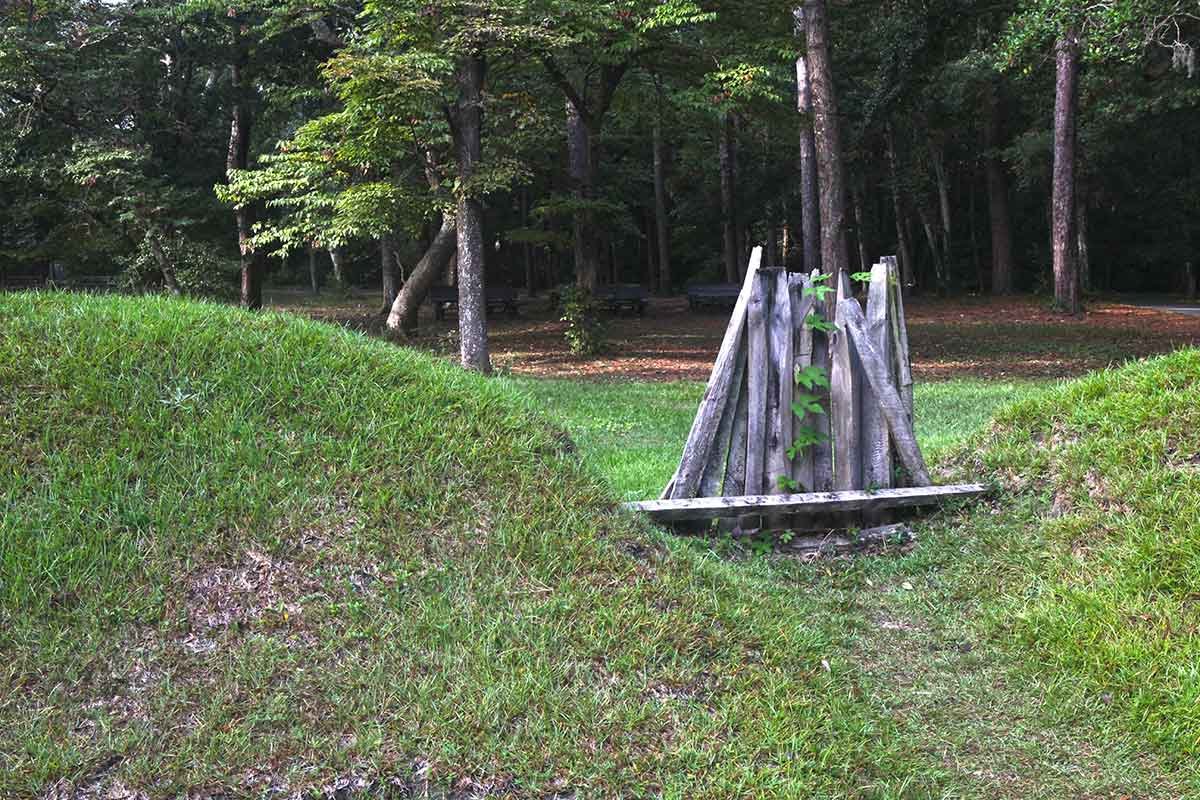
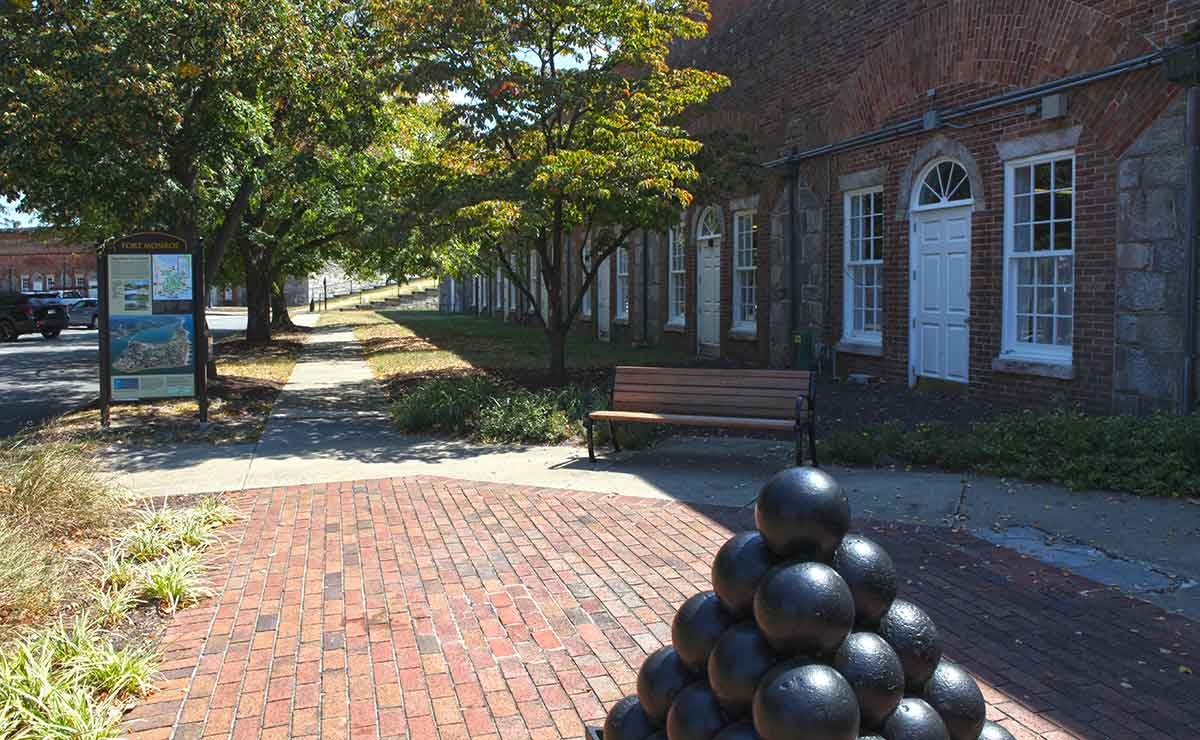
The fort remained active through World War One, World War Two, and the Cold War. In 2011, after nearly two centuries of continuous use, it was officially decommissioned and preserved as a National Monument. Today you can walk the moat, climb the ramparts, and stand at the water’s edge where the White Lion anchored in 1619 — and look out across the same harbor where three men once rowed toward the light in 1861.
Fort Monroe is a strange, layered paradox. A fortress built for war that became a gateway to liberty. A place where American slavery first took root, and where it began to wither. And through every crisis since 1819, through civil war and world war and everything between, it was never once taken by an enemy.